
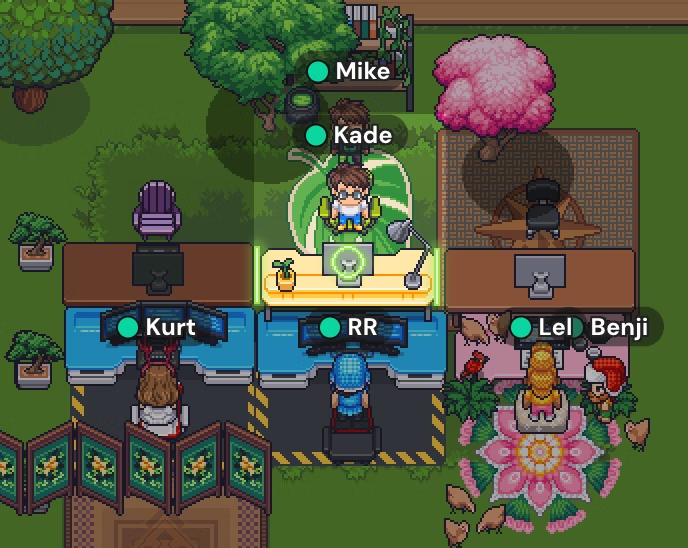
The old-fashioned method of office-based work is becoming increasingly ineffective. Remote work, which gained prominence during the COVID-19 pandemic, has proven to be more flexible and efficient.
It alleviates the daily strain of commuting and allows employees to work from their preferred environments, whether it’s a home office, a cosy cafe, or even while travelling. This flexibility is a game-changer, promoting a work-life balance that traditional office settings often lack.
The Tools Powering Our Remote Success
To keep operations running smoothly despite the distance, we rely on a suite of innovative tools:
Beyond our primary communication tools, we stay connected through emails, SMS, phone calls, and WhatsApp for urgent communications and quick updates.
For project management and documentation, Google Suite, Confluence, and Jira are indispensable, keeping our projects on track and our team informed. We also leverage Loom to create concise, informative videos for training clients and demonstrating processes. Additionally, Quip enhances our ability to collaborate on documents in real-time.
At one point, half of our team was travelling overseas, to places like Canada and South Africa, for personal and professional reasons. Despite these challenges, our flexible working model and strategic use of technology allowed us to continue operations without a hitch. We even achieved a Salesforce Customer Satisfaction (CSAT) Score of 5, the highest level of satisfaction.
Our experience has reinforced our belief in the virtual-first approach. With the right tools and open communication, teams can be productive and connected no matter where they are. Remote work supports both professional success and personal well-being, fostering a balance that benefits our employees and clients alike.
Working remotely has been a transformative experience for one of our team members, Ashish. It allows him to balance work and personal life better than a traditional office setting.
“The flexibility to manage my time and environment has significantly boosted my productivity and job satisfaction. For instance, having a dedicated workspace at home helps me switch into “work mode” and stay focused during working hours.” he mentioned.
The trust and openness within our team have been instrumental in making remote work successful. Regular check-ins and our half-hour activity time, called Mission Control, keep us connected and maintain team morale. During Mission Control, we catch up virtually to listen to podcasts, play puzzles, or talk casually. Customising my work environment to suit my needs—whether it’s adjusting the lighting, playing background music, or taking short breaks—has also been incredibly beneficial.
“One key benefit I’ve noticed is the increased flexibility in managing my schedule. This allows me to be more productive during my peak hours and take breaks when needed, without feeling confined to a strict 9-to-5 routine. This approach has not only improved my work efficiency but also enhanced my overall well-being.” Ashish continued
Our Top Three Tips for Thriving in Remote Work
By sharing our story and insights, we hope to inspire others to see the benefits of remote work and adopt practices that support a flexible and productive work environment.
Remote work isn’t just a trend—it’s a powerful arrangement that, when done right, can drive innovation, satisfaction, and success.